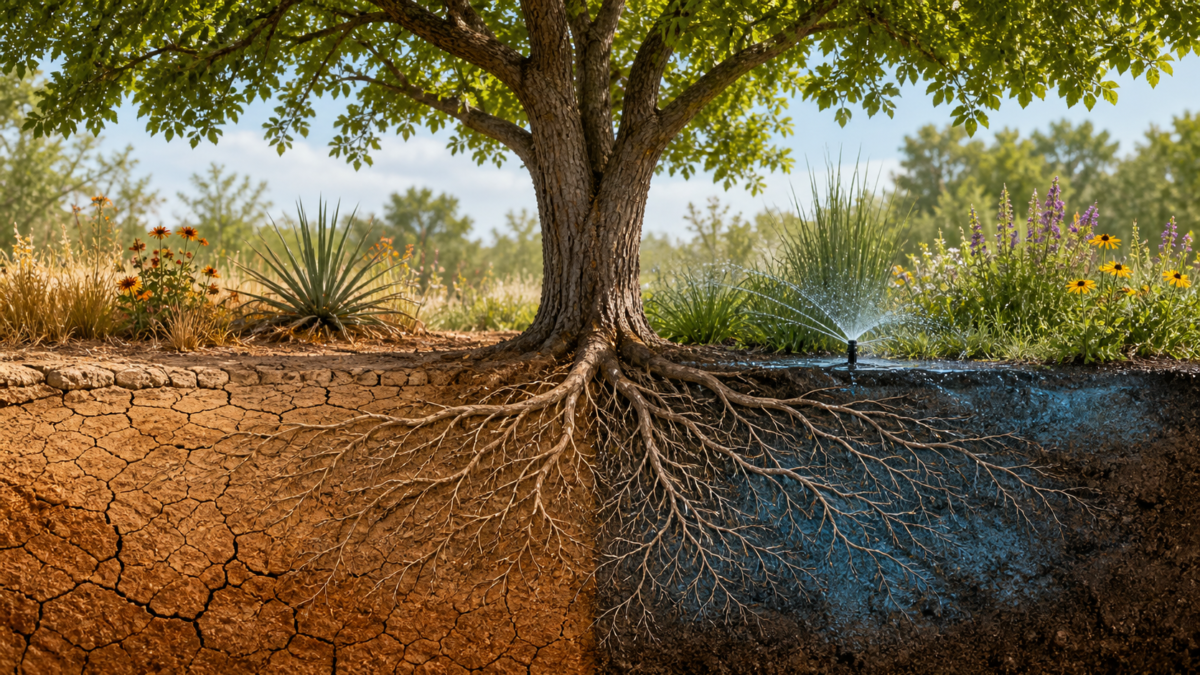
North Texas clay can show wide surface cracks during dry periods and different behavior after rain. Near a Hurst tree, those changes invite questions about roots, irrigation, drainage, and buildings. Start by documenting the parcel rather than assuming that a visible crack proves a root problem. The Web Soil Survey can provide broad soil information, while actual site conditions still need direct observation.
What do North Texas clay cracks near Hurst tree roots indicate?
Surface cracks can reflect drying and shrinking, but their size and position alone do not identify the cause of canopy change or structural movement. Note distance from trunks, downspouts, pavement, and irrigation heads.
The DFW climate narrative provides regional context, not a substitute for a site inspection.
North Texas clay crack observations around Hurst trees planning is strongest when observations are recorded in plain language: location, sequence, visible condition, access route, and nearby targets. Avoid treating one symptom as proof of a cause. A site review can distinguish the question that needs attention now from details that can be monitored as conditions change. Read tree-health resources for canopy observations.
North Texas clay crack observations around Hurst trees also benefits from a staged decision. First describe what is visible without assigning blame or predicting an outcome. Next identify who could be affected, what work area is available, and which facts need confirmation. Then preserve the notes, photos, and plan changes with the project record. This sequence makes it easier for everyone involved to discuss the same conditions and prevents a later decision from being based on a remembered detail rather than the site information.
How can Hurst moisture consistency support clay-soil observation?
Moisture consistency means avoiding abrupt extremes where practical, while respecting local restrictions and the needs of the landscape. Record rainfall, irrigation adjustments, and runoff instead of guessing from one dry week.
EPA landscaping tips can inform water-wise landscape planning. Avoid a universal watering schedule.
North Texas clay crack observations around Hurst trees planning is strongest when observations are recorded in plain language: location, sequence, visible condition, access route, and nearby targets. Avoid treating one symptom as proof of a cause. A site review can distinguish the question that needs attention now from details that can be monitored as conditions change. Use property-planning resources for site mapping.
North Texas clay crack observations around Hurst trees also benefits from a staged decision. First describe what is visible without assigning blame or predicting an outcome. Next identify who could be affected, what work area is available, and which facts need confirmation. Then preserve the notes, photos, and plan changes with the project record. This sequence makes it easier for everyone involved to discuss the same conditions and prevents a later decision from being based on a remembered detail rather than the site information.
Why should Hurst parcel soil and drainage be mapped near trees?
A parcel sketch should include roof discharge, slopes, hardscape, planted beds, and low spots. Water moves through a whole site, not just beneath one tree.
Texas A&M AgriLife Extension is a Texas-specific educational resource for further plant and soil questions.
North Texas clay crack observations around Hurst trees planning is strongest when observations are recorded in plain language: location, sequence, visible condition, access route, and nearby targets. Avoid treating one symptom as proof of a cause. A site review can distinguish the question that needs attention now from details that can be monitored as conditions change. Keep a dated photo record.
North Texas clay crack observations around Hurst trees also benefits from a staged decision. First describe what is visible without assigning blame or predicting an outcome. Next identify who could be affected, what work area is available, and which facts need confirmation. Then preserve the notes, photos, and plan changes with the project record. This sequence makes it easier for everyone involved to discuss the same conditions and prevents a later decision from being based on a remembered detail rather than the site information.
| Observation | Map with it | Question |
|---|---|---|
| Surface crack | Trunk and downspout | When did it appear? |
| Leaf change | Exposure and irrigation | Is the pattern repeating? |
| Wet low spot | Slope and paving | Where does runoff travel? |
| Building change | Date and location | Who should evaluate it? |
When do North Texas clay cracks warrant foundation and tree questions?
A new structural crack, shifting door, exposed root, or rapidly changing tree condition deserves the appropriate expert question. Do not diagnose building performance from tree roots alone.
The roots-and-foundation guide helps frame observations carefully.
North Texas clay crack observations around Hurst trees planning is strongest when observations are recorded in plain language: location, sequence, visible condition, access route, and nearby targets. Avoid treating one symptom as proof of a cause. A site review can distinguish the question that needs attention now from details that can be monitored as conditions change. Avoid treating the sketch as a survey.
North Texas clay crack observations around Hurst trees also benefits from a staged decision. First describe what is visible without assigning blame or predicting an outcome. Next identify who could be affected, what work area is available, and which facts need confirmation. Then preserve the notes, photos, and plan changes with the project record. This sequence makes it easier for everyone involved to discuss the same conditions and prevents a later decision from being based on a remembered detail rather than the site information.
How can Hurst irrigation changes alter clay-root observations?
Check whether an irrigation repair, new bed, redirected downspout, or removed turf changed where water lands. The Hurst drought-stressed tree guide adds useful monitoring context.
Changes should be made intentionally and recorded, not layered on during a heat period without knowing what was changed.
North Texas clay crack observations around Hurst trees planning is strongest when observations are recorded in plain language: location, sequence, visible condition, access route, and nearby targets. Avoid treating one symptom as proof of a cause. A site review can distinguish the question that needs attention now from details that can be monitored as conditions change. Review drainage changes before adding landscape features.
North Texas clay crack observations around Hurst trees also benefits from a staged decision. First describe what is visible without assigning blame or predicting an outcome. Next identify who could be affected, what work area is available, and which facts need confirmation. Then preserve the notes, photos, and plan changes with the project record. This sequence makes it easier for everyone involved to discuss the same conditions and prevents a later decision from being based on a remembered detail rather than the site information.
What North Texas clay and Hurst tree checklist helps homeowners record change?
A repeatable log is more useful than a dramatic description.
Use the checklist as a comparison tool over time.
North Texas clay crack observations around Hurst trees planning is strongest when observations are recorded in plain language: location, sequence, visible condition, access route, and nearby targets. Avoid treating one symptom as proof of a cause. A site review can distinguish the question that needs attention now from details that can be monitored as conditions change. Bring the log to an estimate conversation.
North Texas clay crack observations around Hurst trees also benefits from a staged decision. First describe what is visible without assigning blame or predicting an outcome. Next identify who could be affected, what work area is available, and which facts need confirmation. Then preserve the notes, photos, and plan changes with the project record. This sequence makes it easier for everyone involved to discuss the same conditions and prevents a later decision from being based on a remembered detail rather than the site information.
Infographic concept: show a Hurst yard cross-section with clay surface, roots, roof runoff, irrigation zone, paved area, crack location, and a simple observation log The drawing would be an educational planning aid, not a site measurement or instruction to undertake hazardous work.
- Photograph cracks with a location reference.
- Map trees, drains, and hardscape.
- Record rainfall and irrigation changes.
- Note canopy and exposed-root changes.
- Avoid abrupt site-care changes.
- Compare conditions over time.
- Direct tree and building questions to appropriate reviewers.
What Hurst clay-soil tree questions help avoid single-cause assumptions?
Compare photos from similar angles after dry weather and after rain, keeping safety and access conditions in view.
A tree assessment and a building assessment answer different questions and should not be collapsed into one conclusion.
North Texas clay crack observations around Hurst trees planning is strongest when observations are recorded in plain language: location, sequence, visible condition, access route, and nearby targets. Avoid treating one symptom as proof of a cause. A site review can distinguish the question that needs attention now from details that can be monitored as conditions change. Use Hurst Tree Service contact to discuss tree-specific observations.
North Texas clay crack observations around Hurst trees also benefits from a staged decision. First describe what is visible without assigning blame or predicting an outcome. Next identify who could be affected, what work area is available, and which facts need confirmation. Then preserve the notes, photos, and plan changes with the project record. This sequence makes it easier for everyone involved to discuss the same conditions and prevents a later decision from being based on a remembered detail rather than the site information.
Parcel observations gain value when they are repeated under comparable conditions. Mark the photo position, date, weather, and recent watering change. This record helps distinguish a seasonal surface response from a new site condition that deserves a separate tree, drainage, or building question.
Parcel observations gain value when they are repeated under comparable conditions. Mark the photo position, date, weather, and recent watering change. This record helps distinguish a seasonal surface response from a new site condition that deserves a separate tree, drainage, or building question.
What North Texas clay crack FAQs help Hurst tree-root planning?
Do clay cracks prove that tree roots caused a foundation issue?
No. Cracks are observations; tree and building questions need appropriate, separate evaluation.
Should I change irrigation immediately when soil cracks?
Document current conditions and avoid abrupt, unsupported changes. Site needs vary with soil, weather, drainage, and planting.
What should I photograph near a Hurst tree?
Take wide and close photos of cracks, trunk area, canopy, drains, pavement, and any exposed roots from safe locations.
Can a soil survey diagnose my yard?
It provides broad mapping information, not a diagnosis of an individual parcel or tree.
When is a tree assessment useful?
It is useful when canopy, roots, lean, damage, access, or a planned site change creates a tree-specific question.
With the observations, access details, and questions gathered, Hurst Tree Service can discuss an appropriate scope. Use the contact page to share the site details and timing.