Categories
Tree Trimming & Pruning

When to Prune Freeze-Damaged Trees in Hurst

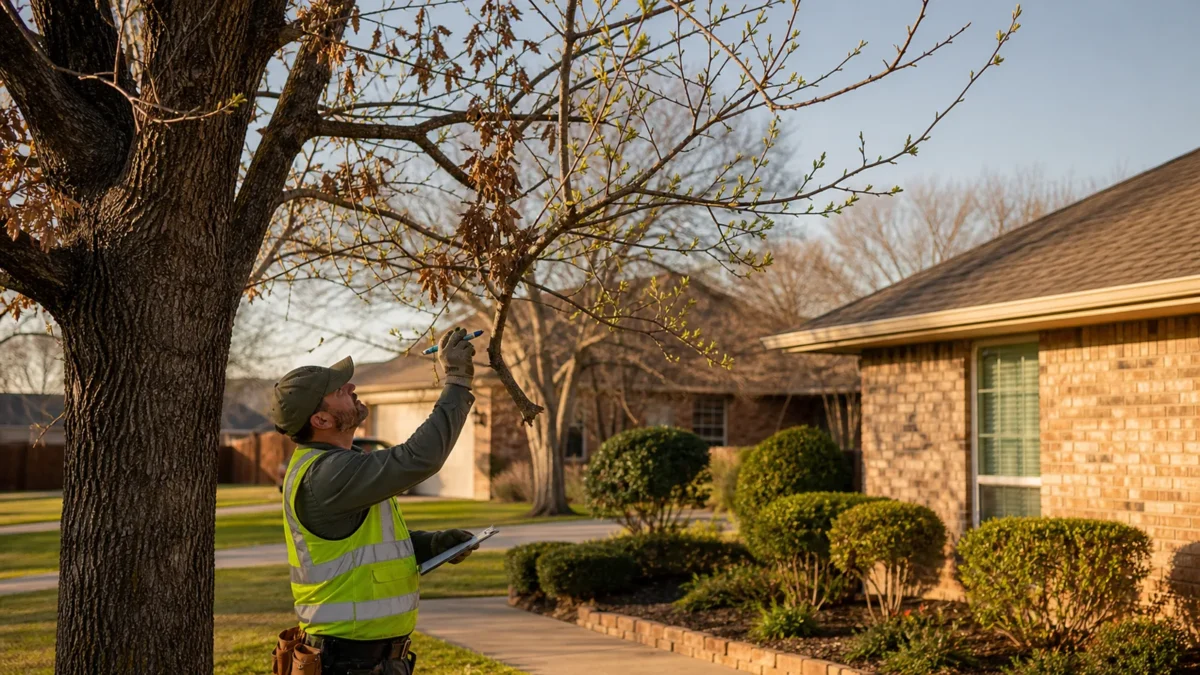
Answer first: Unless broken wood is hazardous, wait until new growth clearly separates living from dead tissue before major freeze-damage pruning in Hurst; premature cutting can remove viable branches and make the final scope harder to judge.

Set timing and safety rules after North Texas cold events. The safest useful next step is to document the condition, protect the affected area, and request a scope tied to the tree, property, and intended outcome.

Why this question matters on a Hurst property?

Tree decisions in Hurst and Tarrant County are shaped by both the tree and what surrounds it. A defect above an unused corner has different consequences from the same defect above a bedroom, school route, parking stall, or business entrance. Good planning evaluates the target, access, and tree condition together.

Look for buds, flexible twigs, green cambium in small test areas, bark splitting, branch attachment damage, and delayed growth by species. That evidence does not automatically require major work. It helps distinguish routine maintenance from a condition that needs faster professional review.

Describe what you can see without naming a cause you have not verified. “The west trunk moved after Tuesday’s rain” is more useful than “the roots are failing.” “One branch now touches the roof in wind” is more actionable than “the whole tree is dangerous.” Precise observations support a precise estimate.

How can owners inspect freeze damaged tree pruning safely?

Freeze Damaged Tree Pruning observations for Hurst properties
Observation What to record Practical response
View the entire site. Start far enough away to see crown shape, lean, surrounding targets, and an equipment route. Never stand under suspicious limbs or between a leaning tree and the direction it could fall. Photograph and compare over time; request an assessment if the condition is active or creates a safety risk.
Check the base from safe ground. Look for fresh soil lifting, cracks, cavities, mushrooms, exposed roots, mower damage, or a buried root flare. Do not dig, probe deeply, or pull loose bark. Photograph and compare over time; request an assessment if the condition is active or creates a safety risk.
Scan the trunk and crown. Note splits, deadwood, hanging branches, weak unions, sparse foliage, storm wounds, and branches contacting buildings or lines. Binoculars and zoom photos help without climbing. Photograph and compare over time; request an assessment if the condition is active or creates a safety risk.
Record what could be affected. Include rooms, roofs, walks, parked vehicles, play areas, neighboring property, signs, lighting, irrigation, fences, and utilities. Photograph and compare over time; request an assessment if the condition is active or creates a safety risk.
Add a timeline. Date wide and close photographs and note storms, trenching, construction, changes in irrigation, prior pruning, or when occupants first noticed the condition. Photograph and compare over time; request an assessment if the condition is active or creates a safety risk.

For freeze damaged tree pruning Hurst TX, pay particular attention to this topic-specific evidence: Look for buds, flexible twigs, green cambium in small test areas, bark splitting, branch attachment damage, and delayed growth by species.

What should owners do before scheduling freeze damaged tree pruning work?

  • Remove immediate hanging hazards first. Record who will handle it and when.
  • Allow slower species time to leaf out. Record who will handle it and when.
  • Mark dieback before cutting. Record who will handle it and when.
  • Avoid topping to make the crown look even. Record who will handle it and when.

If electrical conductors, fire, injured people, blocked emergency access, or a tree on an occupied structure are involved, contact the relevant emergency service or utility first. A general tree-service appointment is not a substitute for an emergency response.

How does an assessment define the right freeze damaged tree pruning scope?

The proposal should explain what the work changes. Pruning may remove a defect or create clearance; removal eliminates the whole tree but introduces rigging and stump choices; grinding addresses surface use but does not excavate every root; clearing prepares a larger area but must protect what remains. These are separate outcomes.

The site review may include species identification, tree vitality, root flare and soil conditions, trunk and branch attachments, decay indicators, crown distribution, target use, utility proximity, and access. The selected checks should answer a defined question; not every tree needs every test.

A useful written scope identifies the exact tree or work area, the intended cuts or removal method, safety and access controls, cleanup, stump or chip handling, exclusions, and what would trigger a change. Ask for ambiguous phrases such as “trim as needed” or “clean up tree” to be translated into measurable objectives.

Current Hurst Tree Service options related to this topic

The public Hurst Tree Service site confirms the following related services. Because the site currently presents them on one main service page, the anchor text below tells readers which offer is relevant while the contact page provides the conversion path.

These services are not interchangeable. Trimming and pruning retain a tree while changing selected branches. Complete removal addresses the whole tree and requires decisions about wood and stump handling. Stump grinding restores surface use. Emergency service prioritizes immediate hazards. Shrub work and land clearing operate at different scales and should not be treated as tree-risk substitutes.

Use the Hurst Tree Service contact page to describe the condition and request a free estimate. Include the tree’s position, nearby targets, access limitations, and photographs so the conversation begins with the same scope.

How should owners compare recommendations for freeze damaged tree pruning?

  • Objective: Is the proposal solving a verified defect, clearance conflict, access need, or removal decision?
  • Method: Does it explain climbing, rigging, equipment, drop-zone, utility, and property-protection needs?
  • Extent: Which branches, stems, stumps, shrubs, or lot areas are included, and which are excluded?
  • Cleanup: Are logs, chips, fine debris, stump grindings, ruts, and final grading addressed?
  • Follow-up: Does a retained tree, support system, replacement planting, or disturbed area need monitoring or maintenance?

Price matters, but it can only be compared after scope. Two numbers are not equivalent when one includes stump work and haul-off while another stops at the trunk, or when one protects a narrow access route and another assumes unrestricted machine access.

Which mistakes make freeze damaged tree pruning work less safe?

Avoid comparing proposals only by price or by how much material will be removed. A low number can omit cleanup, stump depth, traffic control, property protection, or restoration; an aggressive scope can remove more living crown than the tree can reasonably support.

Another mistake is hiding the symptom before the visit. Fresh paint, filled cracks, removed bark, cut roots, or partial branch removal can make the failure pattern harder to understand. Stabilize access and protect people first; preserve useful evidence until the tree professional has seen it.

What should owners expect after a freeze damaged tree pruning estimate?

Before scheduling, confirm the date window, site access, weather policy, vehicles and items to move, pet and tenant coordination, utility or street requirements, and who completes the final walk-through. If work conditions change, approve a written change rather than relying on an informal conversation during active cutting.

After the work, photograph the completed tree or area from the same viewpoints used before. Keep the estimate, invoice, work notes, stump depth or support details, and any maintenance instructions with the property file. For retained trees, compare condition after the next major storm and during the following growing season.

What are the key takeaways about freeze damaged tree pruning in Hurst?

Unless broken wood is hazardous, wait until new growth clearly separates living from dead tissue before major freeze-damage pruning in Hurst; premature cutting can remove viable branches and make the final scope harder to judge. On a Hurst property, combine that answer with a safe inspection, dated evidence, target and access review, and a written outcome-based scope. The closest service paths are Professional Tree Trimming & Pruning, Complete Tree Removal Services, and Emergency Tree Service.

Which primary sources support this guidance?

These primary and standards-based resources explain the underlying safety, soil, or tree-care principles. A site-specific assessment and applicable local requirements control the final scope.

Which related local guides should you read next?

Use these related guides to compare adjacent service decisions and prepare a clearer site-specific scope.

Frequently Asked Questions

What is the first step for freeze damaged tree pruning Hurst TX?

Start with a safe ground-level check and dated photographs. Unless broken wood is hazardous, wait until new growth clearly separates living from dead tissue before major freeze-damage pruning in Hurst; premature cutting can remove viable branches and make the final scope harder to judge. Keep people away from unstable wood, moving roots, and electrical contact while you arrange the appropriate assessment.

Can a Hurst homeowner handle this work without a tree service?

Homeowners can document conditions, clear ordinary access, and monitor stable non-hazardous changes. Climbing, chainsaws, large limbs, unstable trees, rigging, stump grinders, and work near utilities require suitable training, equipment, and site controls.

How does Hurst weather affect freeze damaged tree pruning Hurst TX?

North Texas heat, drought, wind, thunderstorms, heavy rain, and occasional freezes can reveal or worsen tree stress and defects. Weather is context rather than a diagnosis, so compare the tree before and after the event and note soil and crown changes.

How quickly should I act about freeze damaged tree pruning Hurst TX?

Act immediately around electrical contact, fallen or suspended wood, active root movement, fresh trunk splitting, or an unstable tree over an occupied target. Stable maintenance concerns can be prioritized after an on-site review and written scope.

How do I request professional tree trimming & pruning in Hurst, Texas?

Use the Hurst Tree Service contact page or call 817-382-3311. Share the tree or work-area location, the change you observed, nearby structures or utilities, access width, and several clear photographs so the visit can be prepared efficiently.
Categories
Tree Trimming & Pruning

Tree Limbs Over a Hurst Roof: Clearance Without Ruining the Tree

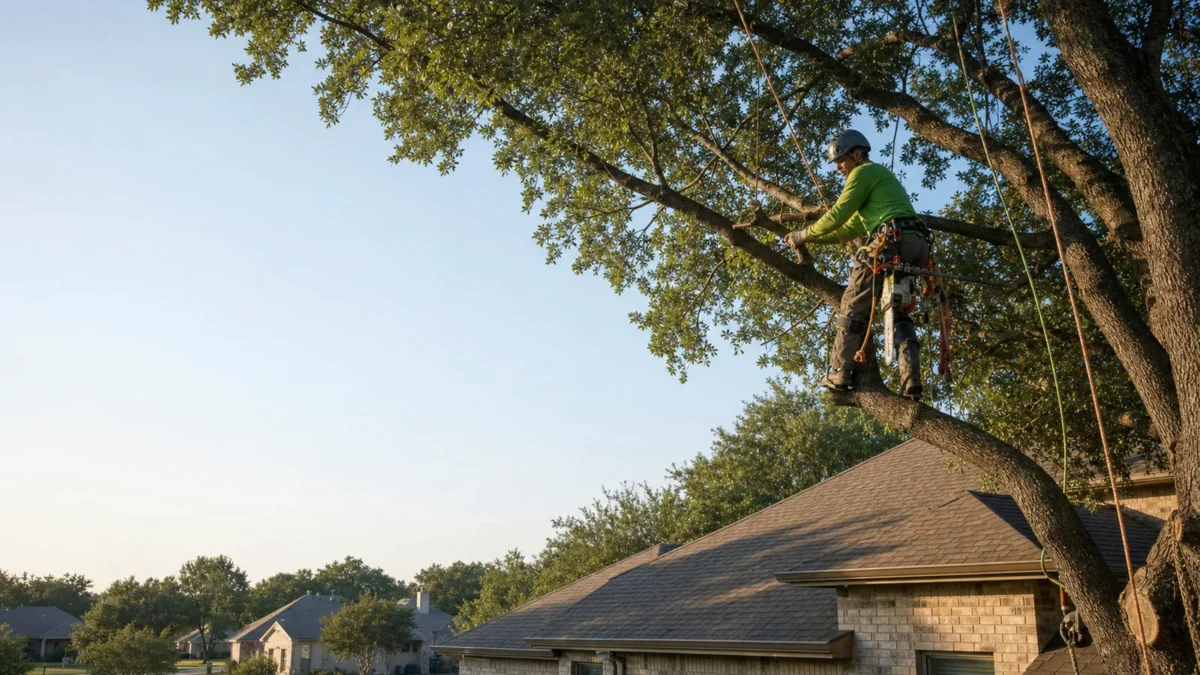
Answer first: Roof clearance in Hurst should stop rubbing and address defective limbs while retaining a balanced crown; removing every branch that crosses the roof line can create poor structure, stress, and new end weight.

Translate a common homeowner concern into a specific, conservative pruning objective. The safest useful next step is to document the condition, protect the affected area, and request a scope tied to the tree, property, and intended outcome.

Why this question matters on a Hurst property?

Hurst sits in an urban North Texas landscape where mature shade trees often share limited space with roofs, driveways, fences, sidewalks, utilities, and neighboring properties. Heat, compacted soil, strong thunderstorms, and irregular rainfall can expose weak attachments or amplify stress, but a local weather event does not by itself identify the correct service.

Separate direct roof contact, deadwood, weak attachments, gutter obstruction, and simple overhang because each calls for a different cut. That evidence does not automatically require major work. It helps distinguish routine maintenance from a condition that needs faster professional review.

Describe what you can see without naming a cause you have not verified. “The west trunk moved after Tuesday’s rain” is more useful than “the roots are failing.” “One branch now touches the roof in wind” is more actionable than “the whole tree is dangerous.” Precise observations support a precise estimate.

How can owners inspect tree limbs over roof safely?

Tree Limbs Over Roof observations for Hurst properties
Observation What to record Practical response
View the entire site. Start far enough away to see crown shape, lean, surrounding targets, and an equipment route. Never stand under suspicious limbs or between a leaning tree and the direction it could fall. Photograph and compare over time; request an assessment if the condition is active or creates a safety risk.
Check the base from safe ground. Look for fresh soil lifting, cracks, cavities, mushrooms, exposed roots, mower damage, or a buried root flare. Do not dig, probe deeply, or pull loose bark. Photograph and compare over time; request an assessment if the condition is active or creates a safety risk.
Scan the trunk and crown. Note splits, deadwood, hanging branches, weak unions, sparse foliage, storm wounds, and branches contacting buildings or lines. Binoculars and zoom photos help without climbing. Photograph and compare over time; request an assessment if the condition is active or creates a safety risk.
Record what could be affected. Include rooms, roofs, walks, parked vehicles, play areas, neighboring property, signs, lighting, irrigation, fences, and utilities. Photograph and compare over time; request an assessment if the condition is active or creates a safety risk.
Add a timeline. Date wide and close photographs and note storms, trenching, construction, changes in irrigation, prior pruning, or when occupants first noticed the condition. Photograph and compare over time; request an assessment if the condition is active or creates a safety risk.

For tree limbs over roof Hurst TX, pay particular attention to this topic-specific evidence: Separate direct roof contact, deadwood, weak attachments, gutter obstruction, and simple overhang because each calls for a different cut.

What should owners do before scheduling tree limbs over roof work?

  • Inspect the roof from a safe location. Record who will handle it and when.
  • Identify contact points and dead limbs. Record who will handle it and when.
  • Set a realistic clearance distance. Record who will handle it and when.
  • Review how cuts affect crown balance. Record who will handle it and when.

If electrical conductors, fire, injured people, blocked emergency access, or a tree on an occupied structure are involved, contact the relevant emergency service or utility first. A general tree-service appointment is not a substitute for an emergency response.

How does an assessment define the right tree limbs over roof scope?

Owners do not need to diagnose the tree before calling. They do benefit from asking how the recommendation was reached: which observation matters, how the work addresses it, what alternatives were considered, and what remains outside the scope.

The site review may include species identification, tree vitality, root flare and soil conditions, trunk and branch attachments, decay indicators, crown distribution, target use, utility proximity, and access. The selected checks should answer a defined question; not every tree needs every test.

A useful written scope identifies the exact tree or work area, the intended cuts or removal method, safety and access controls, cleanup, stump or chip handling, exclusions, and what would trigger a change. Ask for ambiguous phrases such as “trim as needed” or “clean up tree” to be translated into measurable objectives.

Current Hurst Tree Service options related to this topic

The public Hurst Tree Service site confirms the following related services. Because the site currently presents them on one main service page, the anchor text below tells readers which offer is relevant while the contact page provides the conversion path.

These services are not interchangeable. Trimming and pruning retain a tree while changing selected branches. Complete removal addresses the whole tree and requires decisions about wood and stump handling. Stump grinding restores surface use. Emergency service prioritizes immediate hazards. Shrub work and land clearing operate at different scales and should not be treated as tree-risk substitutes.

Use the Hurst Tree Service contact page to describe the condition and request a free estimate. Include the tree’s position, nearby targets, access limitations, and photographs so the conversation begins with the same scope.

How should owners compare recommendations for tree limbs over roof?

  • Objective: Is the proposal solving a verified defect, clearance conflict, access need, or removal decision?
  • Method: Does it explain climbing, rigging, equipment, drop-zone, utility, and property-protection needs?
  • Extent: Which branches, stems, stumps, shrubs, or lot areas are included, and which are excluded?
  • Cleanup: Are logs, chips, fine debris, stump grindings, ruts, and final grading addressed?
  • Follow-up: Does a retained tree, support system, replacement planting, or disturbed area need monitoring or maintenance?

Price matters, but it can only be compared after scope. Two numbers are not equivalent when one includes stump work and haul-off while another stops at the trunk, or when one protects a narrow access route and another assumes unrestricted machine access.

Which mistakes make tree limbs over roof work less safe?

Do not let urgency erase documentation. When conditions are safe enough, wide and close photographs, a marked tree, access measurements, and notes about recent storms or site work make estimates clearer and reduce disagreement about what was included.

Another mistake is hiding the symptom before the visit. Fresh paint, filled cracks, removed bark, cut roots, or partial branch removal can make the failure pattern harder to understand. Stabilize access and protect people first; preserve useful evidence until the tree professional has seen it.

What should owners expect after a tree limbs over roof estimate?

Before scheduling, confirm the date window, site access, weather policy, vehicles and items to move, pet and tenant coordination, utility or street requirements, and who completes the final walk-through. If work conditions change, approve a written change rather than relying on an informal conversation during active cutting.

After the work, photograph the completed tree or area from the same viewpoints used before. Keep the estimate, invoice, work notes, stump depth or support details, and any maintenance instructions with the property file. For retained trees, compare condition after the next major storm and during the following growing season.

What are the key takeaways about tree limbs over roof in Hurst?

Roof clearance in Hurst should stop rubbing and address defective limbs while retaining a balanced crown; removing every branch that crosses the roof line can create poor structure, stress, and new end weight. On a Hurst property, combine that answer with a safe inspection, dated evidence, target and access review, and a written outcome-based scope. The closest service paths are Professional Tree Trimming & Pruning, Complete Tree Removal Services, and Emergency Tree Service.

Which primary sources support this guidance?

These primary and standards-based resources explain the underlying safety, soil, or tree-care principles. A site-specific assessment and applicable local requirements control the final scope.

Which related local guides should you read next?

Use these related guides to compare adjacent service decisions and prepare a clearer site-specific scope.

Frequently Asked Questions

What is the first step for tree limbs over roof Hurst TX?

Start with a safe ground-level check and dated photographs. Roof clearance in Hurst should stop rubbing and address defective limbs while retaining a balanced crown; removing every branch that crosses the roof line can create poor structure, stress, and new end weight. Keep people away from unstable wood, moving roots, and electrical contact while you arrange the appropriate assessment.

Can a Hurst homeowner handle this work without a tree service?

Homeowners can document conditions, clear ordinary access, and monitor stable non-hazardous changes. Climbing, chainsaws, large limbs, unstable trees, rigging, stump grinders, and work near utilities require suitable training, equipment, and site controls.

How does Hurst weather affect tree limbs over roof Hurst TX?

North Texas heat, drought, wind, thunderstorms, heavy rain, and occasional freezes can reveal or worsen tree stress and defects. Weather is context rather than a diagnosis, so compare the tree before and after the event and note soil and crown changes.

How quickly should I act about tree limbs over roof Hurst TX?

Act immediately around electrical contact, fallen or suspended wood, active root movement, fresh trunk splitting, or an unstable tree over an occupied target. Stable maintenance concerns can be prioritized after an on-site review and written scope.

How do I request professional tree trimming & pruning in Hurst, Texas?

Use the Hurst Tree Service contact page or call 817-382-3311. Share the tree or work-area location, the change you observed, nearby structures or utilities, access width, and several clear photographs so the visit can be prepared efficiently.
Categories
Tree Trimming & Pruning

Best Time to Prune Trees in Hurst, TX: A Seasonal Decision Guide

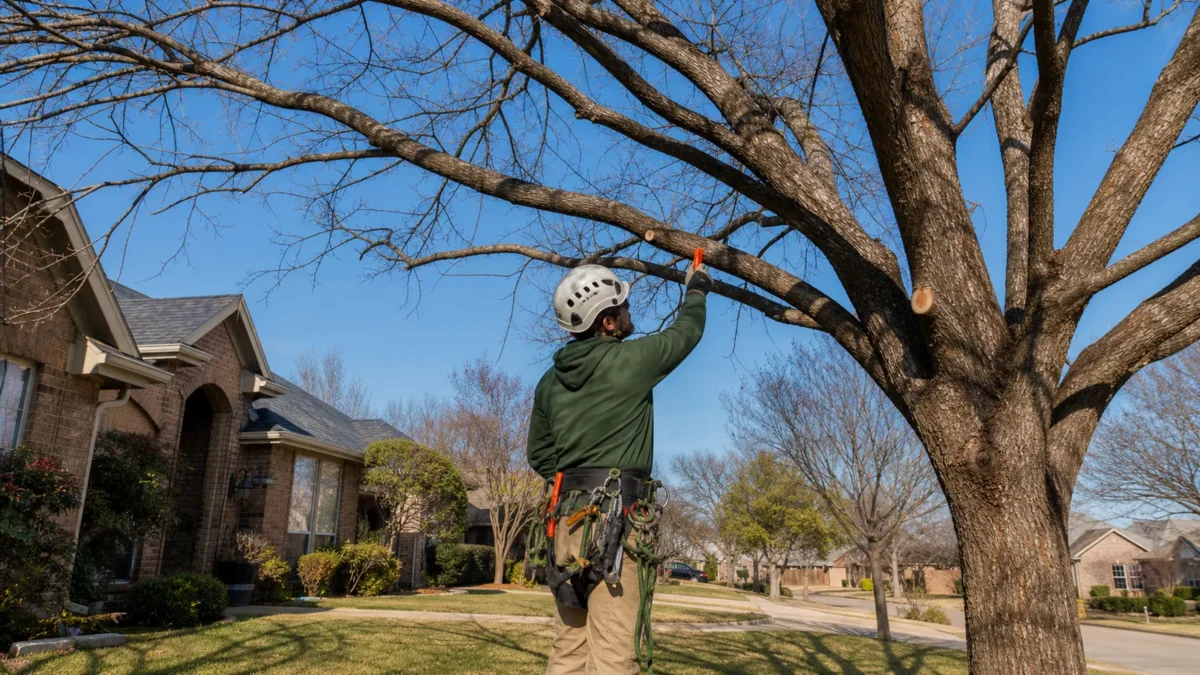
Answer first: The best pruning time in Hurst depends on species and purpose: dormant-season work often makes structure easier to see, while broken, dead, or hazardous branches may need prompt attention regardless of season.

Match pruning timing to tree biology, safety, and North Texas weather rather than a one-date calendar rule. The safest useful next step is to document the condition, protect the affected area, and request a scope tied to the tree, property, and intended outcome.

Why this question matters on a Hurst property?

A Hurst property may contain older oaks and elms, newer ornamental trees, formal hedges, and tight suburban access on the same lot. Each plant responds differently to pruning, heat, root disturbance, and storm exposure, so the work objective should be written before cuts or clearing begin.

Identify the species, pruning objective, flowering cycle, current stress, and whether the work can wait for a lower-stress season. That evidence does not automatically require major work. It helps distinguish routine maintenance from a condition that needs faster professional review.

Describe what you can see without naming a cause you have not verified. “The west trunk moved after Tuesday’s rain” is more useful than “the roots are failing.” “One branch now touches the roof in wind” is more actionable than “the whole tree is dangerous.” Precise observations support a precise estimate.

How can owners inspect best time to prune trees safely?

Best Time To Prune Trees observations for Hurst properties
Observation What to record Practical response
View the entire site. Start far enough away to see crown shape, lean, surrounding targets, and an equipment route. Never stand under suspicious limbs or between a leaning tree and the direction it could fall. Photograph and compare over time; request an assessment if the condition is active or creates a safety risk.
Check the base from safe ground. Look for fresh soil lifting, cracks, cavities, mushrooms, exposed roots, mower damage, or a buried root flare. Do not dig, probe deeply, or pull loose bark. Photograph and compare over time; request an assessment if the condition is active or creates a safety risk.
Scan the trunk and crown. Note splits, deadwood, hanging branches, weak unions, sparse foliage, storm wounds, and branches contacting buildings or lines. Binoculars and zoom photos help without climbing. Photograph and compare over time; request an assessment if the condition is active or creates a safety risk.
Record what could be affected. Include rooms, roofs, walks, parked vehicles, play areas, neighboring property, signs, lighting, irrigation, fences, and utilities. Photograph and compare over time; request an assessment if the condition is active or creates a safety risk.
Add a timeline. Date wide and close photographs and note storms, trenching, construction, changes in irrigation, prior pruning, or when occupants first noticed the condition. Photograph and compare over time; request an assessment if the condition is active or creates a safety risk.

For best time to prune trees Hurst TX, pay particular attention to this topic-specific evidence: Identify the species, pruning objective, flowering cycle, current stress, and whether the work can wait for a lower-stress season.

What should owners do before scheduling best time to prune trees work?

  • Identify the tree before scheduling. Record who will handle it and when.
  • Separate safety work from appearance work. Record who will handle it and when.
  • Avoid heavy canopy loss during heat stress. Record who will handle it and when.
  • Check for active nests and utility conflicts. Record who will handle it and when.

If electrical conductors, fire, injured people, blocked emergency access, or a tree on an occupied structure are involved, contact the relevant emergency service or utility first. A general tree-service appointment is not a substitute for an emergency response.

How does an assessment define the right best time to prune trees scope?

Owners do not need to diagnose the tree before calling. They do benefit from asking how the recommendation was reached: which observation matters, how the work addresses it, what alternatives were considered, and what remains outside the scope.

The site review may include species identification, tree vitality, root flare and soil conditions, trunk and branch attachments, decay indicators, crown distribution, target use, utility proximity, and access. The selected checks should answer a defined question; not every tree needs every test.

A useful written scope identifies the exact tree or work area, the intended cuts or removal method, safety and access controls, cleanup, stump or chip handling, exclusions, and what would trigger a change. Ask for ambiguous phrases such as “trim as needed” or “clean up tree” to be translated into measurable objectives.

Current Hurst Tree Service options related to this topic

The public Hurst Tree Service site confirms the following related services. Because the site currently presents them on one main service page, the anchor text below tells readers which offer is relevant while the contact page provides the conversion path.

These services are not interchangeable. Trimming and pruning retain a tree while changing selected branches. Complete removal addresses the whole tree and requires decisions about wood and stump handling. Stump grinding restores surface use. Emergency service prioritizes immediate hazards. Shrub work and land clearing operate at different scales and should not be treated as tree-risk substitutes.

Use the Hurst Tree Service contact page to describe the condition and request a free estimate. Include the tree’s position, nearby targets, access limitations, and photographs so the conversation begins with the same scope.

How should owners compare recommendations for best time to prune trees?

  • Objective: Is the proposal solving a verified defect, clearance conflict, access need, or removal decision?
  • Method: Does it explain climbing, rigging, equipment, drop-zone, utility, and property-protection needs?
  • Extent: Which branches, stems, stumps, shrubs, or lot areas are included, and which are excluded?
  • Cleanup: Are logs, chips, fine debris, stump grindings, ruts, and final grading addressed?
  • Follow-up: Does a retained tree, support system, replacement planting, or disturbed area need monitoring or maintenance?

Price matters, but it can only be compared after scope. Two numbers are not equivalent when one includes stump work and haul-off while another stops at the trunk, or when one protects a narrow access route and another assumes unrestricted machine access.

Which mistakes make best time to prune trees work less safe?

Do not let urgency erase documentation. When conditions are safe enough, wide and close photographs, a marked tree, access measurements, and notes about recent storms or site work make estimates clearer and reduce disagreement about what was included.

Another mistake is hiding the symptom before the visit. Fresh paint, filled cracks, removed bark, cut roots, or partial branch removal can make the failure pattern harder to understand. Stabilize access and protect people first; preserve useful evidence until the tree professional has seen it.

What should owners expect after a best time to prune trees estimate?

Before scheduling, confirm the date window, site access, weather policy, vehicles and items to move, pet and tenant coordination, utility or street requirements, and who completes the final walk-through. If work conditions change, approve a written change rather than relying on an informal conversation during active cutting.

After the work, photograph the completed tree or area from the same viewpoints used before. Keep the estimate, invoice, work notes, stump depth or support details, and any maintenance instructions with the property file. For retained trees, compare condition after the next major storm and during the following growing season.

What are the key takeaways about best time to prune trees in Hurst?

The best pruning time in Hurst depends on species and purpose: dormant-season work often makes structure easier to see, while broken, dead, or hazardous branches may need prompt attention regardless of season. On a Hurst property, combine that answer with a safe inspection, dated evidence, target and access review, and a written outcome-based scope. The closest service paths are Professional Tree Trimming & Pruning, Emergency Tree Service, and Shrub & Hedge Trimming.

Which primary sources support this guidance?

These primary and standards-based resources explain the underlying safety, soil, or tree-care principles. A site-specific assessment and applicable local requirements control the final scope.

Which related local guides should you read next?

Use these related guides to compare adjacent service decisions and prepare a clearer site-specific scope.

Frequently Asked Questions

What is the first step for best time to prune trees Hurst TX?

Start with a safe ground-level check and dated photographs. The best pruning time in Hurst depends on species and purpose: dormant-season work often makes structure easier to see, while broken, dead, or hazardous branches may need prompt attention regardless of season. Keep people away from unstable wood, moving roots, and electrical contact while you arrange the appropriate assessment.

Can a Hurst homeowner handle this work without a tree service?

Homeowners can document conditions, clear ordinary access, and monitor stable non-hazardous changes. Climbing, chainsaws, large limbs, unstable trees, rigging, stump grinders, and work near utilities require suitable training, equipment, and site controls.

How does Hurst weather affect best time to prune trees Hurst TX?

North Texas heat, drought, wind, thunderstorms, heavy rain, and occasional freezes can reveal or worsen tree stress and defects. Weather is context rather than a diagnosis, so compare the tree before and after the event and note soil and crown changes.

How quickly should I act about best time to prune trees Hurst TX?

Act immediately around electrical contact, fallen or suspended wood, active root movement, fresh trunk splitting, or an unstable tree over an occupied target. Stable maintenance concerns can be prioritized after an on-site review and written scope.

How do I request professional tree trimming & pruning in Hurst, Texas?

Use the Hurst Tree Service contact page or call 817-382-3311. Share the tree or work-area location, the change you observed, nearby structures or utilities, access width, and several clear photographs so the visit can be prepared efficiently.

Categories
Tree Trimming & Pruning

Live Oak Canopy Thinning in Hurst: How Much Is Too Much?

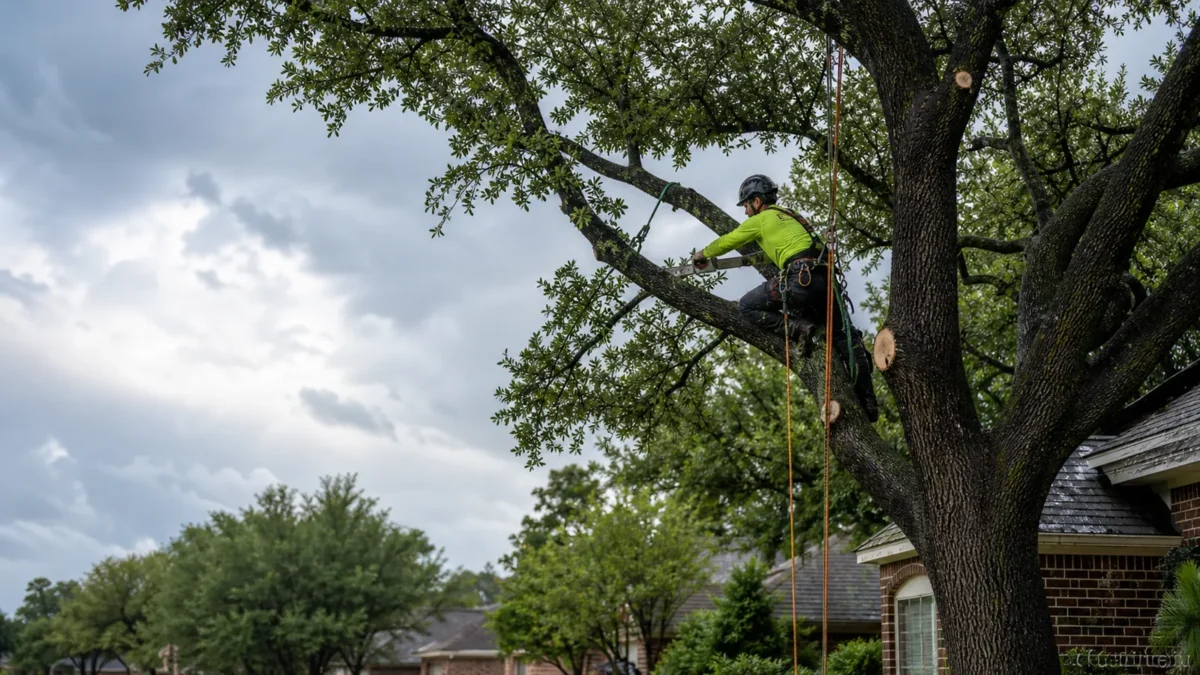
Answer first: Live oak thinning should be selective and conservative: remove defects and solve defined clearance problems while retaining enough evenly distributed foliage to support the tree through Hurst heat, wind, and drought.

Explain why thinning, crown raising, and topping are not interchangeable. The safest useful next step is to document the condition, protect the affected area, and request a scope tied to the tree, property, and intended outcome.

Why this question matters on a Hurst property?

North Texas conditions can change quickly from dry heat to saturated soil and strong wind. That range makes dated observations useful: they show whether a lean, crack, dieback pattern, or clearance conflict is stable, seasonal, or newly progressing.

Judge proposed cuts by branch size, attachment, distribution, the percentage of live crown affected, and the exact clearance goal. That evidence does not automatically require major work. It helps distinguish routine maintenance from a condition that needs faster professional review.

Describe what you can see without naming a cause you have not verified. “The west trunk moved after Tuesday’s rain” is more useful than “the roots are failing.” “One branch now touches the roof in wind” is more actionable than “the whole tree is dangerous.” Precise observations support a precise estimate.

How can owners inspect live oak canopy thinning safely?

Live Oak Canopy Thinning observations for Hurst properties
Observation What to record Practical response
View the entire site. Start far enough away to see crown shape, lean, surrounding targets, and an equipment route. Never stand under suspicious limbs or between a leaning tree and the direction it could fall. Photograph and compare over time; request an assessment if the condition is active or creates a safety risk.
Check the base from safe ground. Look for fresh soil lifting, cracks, cavities, mushrooms, exposed roots, mower damage, or a buried root flare. Do not dig, probe deeply, or pull loose bark. Photograph and compare over time; request an assessment if the condition is active or creates a safety risk.
Scan the trunk and crown. Note splits, deadwood, hanging branches, weak unions, sparse foliage, storm wounds, and branches contacting buildings or lines. Binoculars and zoom photos help without climbing. Photograph and compare over time; request an assessment if the condition is active or creates a safety risk.
Record what could be affected. Include rooms, roofs, walks, parked vehicles, play areas, neighboring property, signs, lighting, irrigation, fences, and utilities. Photograph and compare over time; request an assessment if the condition is active or creates a safety risk.
Add a timeline. Date wide and close photographs and note storms, trenching, construction, changes in irrigation, prior pruning, or when occupants first noticed the condition. Photograph and compare over time; request an assessment if the condition is active or creates a safety risk.

For live oak canopy thinning Hurst TX, pay particular attention to this topic-specific evidence: Judge proposed cuts by branch size, attachment, distribution, the percentage of live crown affected, and the exact clearance goal.

What should owners do before scheduling live oak canopy thinning work?

  • Mark only branches tied to a stated objective. Record who will handle it and when.
  • Retain interior foliage and balanced weight. Record who will handle it and when.
  • Avoid flush cuts and long bare limbs. Record who will handle it and when.
  • Review roof and street clearance separately. Record who will handle it and when.

If electrical conductors, fire, injured people, blocked emergency access, or a tree on an occupied structure are involved, contact the relevant emergency service or utility first. A general tree-service appointment is not a substitute for an emergency response.

How does an assessment define the right live oak canopy thinning scope?

A useful tree-care decision moves from observation to objective. First identify the tree or vegetation and affected part. Next document condition and recent change. Then list people, structures, utilities, and property features that could be affected. Only after those steps should the team choose pruning, removal, stump work, emergency response, hedge care, or clearing.

The site review may include species identification, tree vitality, root flare and soil conditions, trunk and branch attachments, decay indicators, crown distribution, target use, utility proximity, and access. The selected checks should answer a defined question; not every tree needs every test.

A useful written scope identifies the exact tree or work area, the intended cuts or removal method, safety and access controls, cleanup, stump or chip handling, exclusions, and what would trigger a change. Ask for ambiguous phrases such as “trim as needed” or “clean up tree” to be translated into measurable objectives.

Current Hurst Tree Service options related to this topic

The public Hurst Tree Service site confirms the following related services. Because the site currently presents them on one main service page, the anchor text below tells readers which offer is relevant while the contact page provides the conversion path.

These services are not interchangeable. Trimming and pruning retain a tree while changing selected branches. Complete removal addresses the whole tree and requires decisions about wood and stump handling. Stump grinding restores surface use. Emergency service prioritizes immediate hazards. Shrub work and land clearing operate at different scales and should not be treated as tree-risk substitutes.

Use the Hurst Tree Service contact page to describe the condition and request a free estimate. Include the tree’s position, nearby targets, access limitations, and photographs so the conversation begins with the same scope.

How should owners compare recommendations for live oak canopy thinning?

  • Objective: Is the proposal solving a verified defect, clearance conflict, access need, or removal decision?
  • Method: Does it explain climbing, rigging, equipment, drop-zone, utility, and property-protection needs?
  • Extent: Which branches, stems, stumps, shrubs, or lot areas are included, and which are excluded?
  • Cleanup: Are logs, chips, fine debris, stump grindings, ruts, and final grading addressed?
  • Follow-up: Does a retained tree, support system, replacement planting, or disturbed area need monitoring or maintenance?

Price matters, but it can only be compared after scope. Two numbers are not equivalent when one includes stump work and haul-off while another stops at the trunk, or when one protects a narrow access route and another assumes unrestricted machine access.

Which mistakes make live oak canopy thinning work less safe?

Common mistakes include standing beneath hanging wood, using a ladder with a chainsaw, cutting a root or trunk to “test” it, topping a crown for quick clearance, or beginning stump work before utilities are located. These actions can increase risk or remove evidence needed for a sound plan.

Another mistake is hiding the symptom before the visit. Fresh paint, filled cracks, removed bark, cut roots, or partial branch removal can make the failure pattern harder to understand. Stabilize access and protect people first; preserve useful evidence until the tree professional has seen it.

What should owners expect after a live oak canopy thinning estimate?

Before scheduling, confirm the date window, site access, weather policy, vehicles and items to move, pet and tenant coordination, utility or street requirements, and who completes the final walk-through. If work conditions change, approve a written change rather than relying on an informal conversation during active cutting.

After the work, photograph the completed tree or area from the same viewpoints used before. Keep the estimate, invoice, work notes, stump depth or support details, and any maintenance instructions with the property file. For retained trees, compare condition after the next major storm and during the following growing season.

What are the key takeaways about live oak canopy thinning in Hurst?

Live oak thinning should be selective and conservative: remove defects and solve defined clearance problems while retaining enough evenly distributed foliage to support the tree through Hurst heat, wind, and drought. On a Hurst property, combine that answer with a safe inspection, dated evidence, target and access review, and a written outcome-based scope. The closest service paths are Professional Tree Trimming & Pruning, Complete Tree Removal Services, and Emergency Tree Service.

Which primary sources support this guidance?

These primary and standards-based resources explain the underlying safety, soil, or tree-care principles. A site-specific assessment and applicable local requirements control the final scope.

Which related local guides should you read next?

Use these related guides to compare adjacent service decisions and prepare a clearer site-specific scope.

Frequently Asked Questions

What is the first step for live oak canopy thinning Hurst TX?

Start with a safe ground-level check and dated photographs. Live oak thinning should be selective and conservative: remove defects and solve defined clearance problems while retaining enough evenly distributed foliage to support the tree through Hurst heat, wind, and drought. Keep people away from unstable wood, moving roots, and electrical contact while you arrange the appropriate assessment.

Can a Hurst homeowner handle this work without a tree service?

Homeowners can document conditions, clear ordinary access, and monitor stable non-hazardous changes. Climbing, chainsaws, large limbs, unstable trees, rigging, stump grinders, and work near utilities require suitable training, equipment, and site controls.

How does Hurst weather affect live oak canopy thinning Hurst TX?

North Texas heat, drought, wind, thunderstorms, heavy rain, and occasional freezes can reveal or worsen tree stress and defects. Weather is context rather than a diagnosis, so compare the tree before and after the event and note soil and crown changes.

How quickly should I act about live oak canopy thinning Hurst TX?

Act immediately around electrical contact, fallen or suspended wood, active root movement, fresh trunk splitting, or an unstable tree over an occupied target. Stable maintenance concerns can be prioritized after an on-site review and written scope.

How do I request professional tree trimming & pruning in Hurst, Texas?

Use the Hurst Tree Service contact page or call 817-382-3311. Share the tree or work-area location, the change you observed, nearby structures or utilities, access width, and several clear photographs so the visit can be prepared efficiently.